
Making certain things in your life out of routine is actually not necessarily a bad thing. You don’t have to invest extra energy in the topic, it’s almost a robotic process, you don’t have to think about it. It gives you a chance to rest a little, to “numb out”, as I like to put it, just to be in the situation without putting extra effort into it.
The problem is if you have been running in this “reduced mode” in some area of your life for a long time – especially if you are doing it in several areas of your life at the same time – and you no longer feel the motivation to take extra steps to change. This is no longer the definition of resting, of relaxation, but of dullness. And staying in this situation, you can get deeper and deeper over time, even to the point of being downright terrified of any change, of anything that might push you out of this set-in-stone routine. And that’s not in your best interest.
After all, life is about continuous improvement, progress and change, not about choosing a narrow path once in the past and then following it for the rest of your life, no matter what.
I think that after the world events of the past few years, we can all agree in one thing: the only thing that is certain in life is change. So, the best for you is not to resist it, but to ride that wave and go with it.
But let’s see what it’s like in a little more detail when you’re stuck in your personal life or in your work.
Stuck in habits in your personal life

Here, for example, we can talk about when you’re stuck in a relationship. You may feel that not everything is going right, or even that less and less things are going right as your life together goes on. Maybe what used to work is no longer working, or maybe you’re just realising that it only seemed to be working in the past as well. Maybe during the time you’ve been together, your own lives have started to take different directions, which has made the life together increasingly difficult for the two of you. Or perhaps you have noticed that your own life, your individuality, has disappeared in the relationship and it’s just all about your partner now – in your supposedly ‘together’ life. Maybe you realise the fact, that you no longer have even one kind word for each other in the everyday life.
But whatever the problem is, you don’t move on – because you’re stuck in the habit, in the routine. While it’s true that no one is perfect and that a relationship needs work, the question is whether the work is done by both parties. Maybe even you are not trying to resolve the unwanted situation yourself. Because that would mean that you would have to face the fact that you need to change too. And even if you do, will your partner do the same? Because they may not be taking any steps towards change at all, or not at the same speed and to the same extent as you. And it can mean that you may end up not being able to keep the threads of your relationship meet again…
Stuck in habits at work

Financial security, a steady income is an important factor in everyone’s life, because we all live of money. It is what it is, we have to accept it. Yet, some people are so afraid of the uncertainty, of trying something new as per the job aspect of their lives, that they feel paralysed. You might suffer day after day at work, maybe you have not liked what you do for a long time, you are unhappy with your salary, you feel that no one appreciates your work or you might go to work practically every Monday morning feeling sick. However, even at this stage you don’t take steps to change the situation, to look for a new position or a new workplace. In this job at least you know from past experience what you can expect (even if it happens to be a bad thing), you get paid every month, and you can manage your life with that. You’re not progressing, you’re not developing, you’re not building up your insight into the world of work, but at least you know how things will turn out to be. You can feel that you don’t have to make any special effort at work, because it’s all routine. The only thing you don’t take into consideration is the mental toll that this stuckness and lack of motivation is taking on you.
Whether it’s a personal or work-related habit that you are stuck in, this next phrase can come up a lot:
“Yes, I’m really not in a good situation, but if I get out of it, it might be much worse for me outside!”
And in fear of that, you don’t quit. You stay in your dysfunctional relationship, in your dysfunctional job – stuck, increasingly bitter and increasingly lacking energy. But other than the fear of an uncertain future, what else is causing you to stay in these situations?
Some reasons of being stuck in habits
There are countless factors that can cause you to decide to stay in an unfavourable situation in your life. It is very important to note that these can (also) be individual reasons for everyone, however, there are a few typical things that cause many people to remain there.
Low self-confidence, self-esteem, self-belief

If you have a low level in any of the above three, you might think that even if you got out of your bad situation, you couldn’t find a better one. You wouldn’t be able to do another, better job, or even find one, you wouldn’t find an ideal partner, etc. In such cases, a negative inner monologue is running in the background, telling you that you are not capable of doing it. Which is probably not true, but someone, somewhere in your life, has made you believe that and maybe you didn’t even realise it. But it’s sneakily built into your self-image and is constantly buzzing in the background, holding you back from anything that is unfamiliar, that is new, that could be a positive challenge.
The idea that you are not entitled to more/something better

While not necessarily on the surface, unfortunately this thought process also runs in too many people all the time in the background. It makes you not to consider yourself worthy enough to have good things in your life. Maybe someone in your life told you this until it became ingrained in your self-image, or it could simply be that you grew up seeing this around you as a pattern (and the two options are interconnected anyways). It’s very important to be aware that you deserve to have good things in your life, you deserve a good life in general.
It is not mandatory to choose suffering – it’s optional.
Low self-love
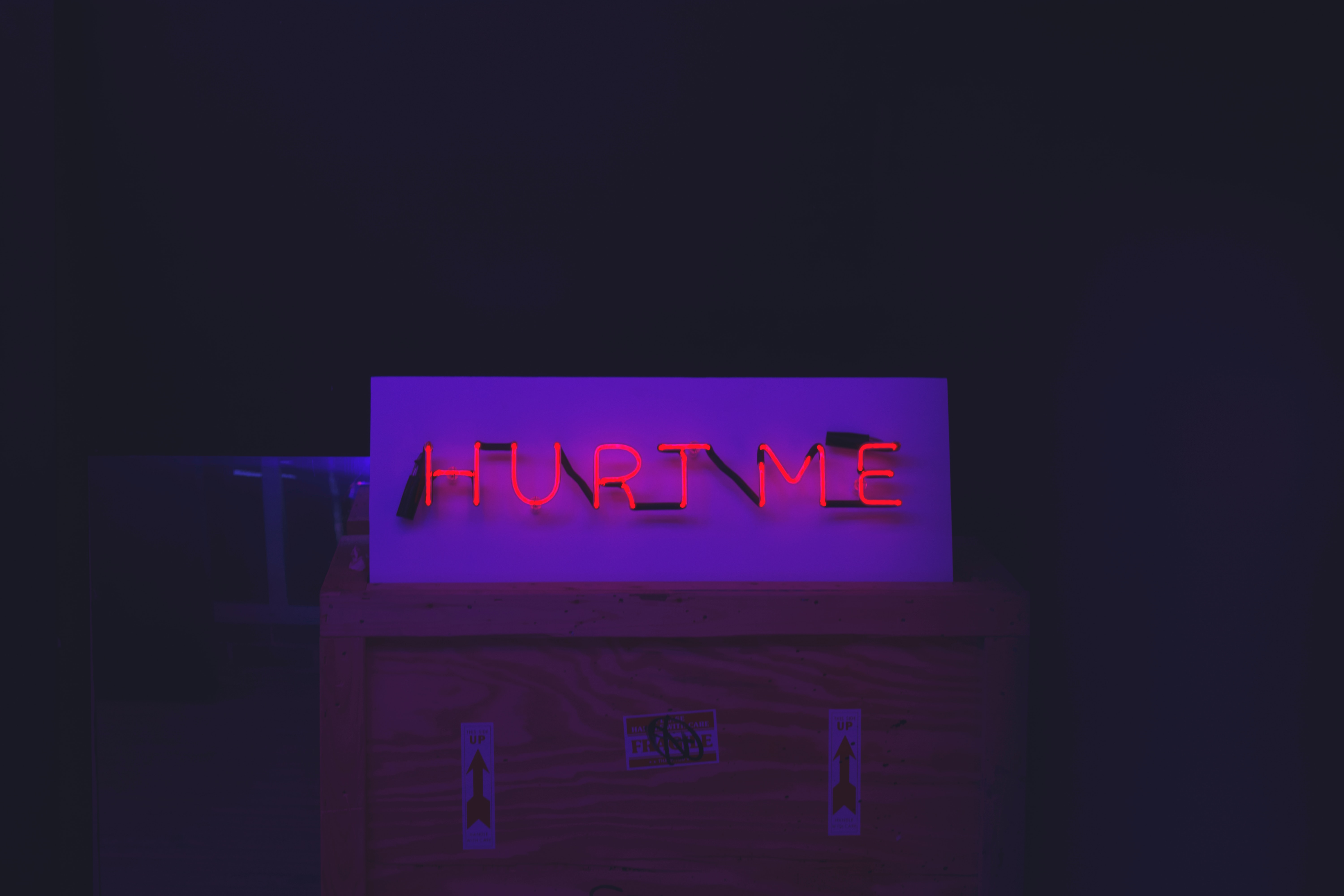
If you don’t love yourself, you are subconsciously creating situations for yourself to hurt yourself. It doesn’t necessarily have to be physical damage, although that can come in the form of illness, for example. You can also hurt yourself by not leaving a job where there is no longer any chance of you feeling good about yourself or becoming a valued member of a team. But it’s also a form of self-harm to remain silent in a relationship where your partner constantly ignores you. Okay, they treat you like that, but you let them. It is also very important to recognise your own responsibility in this.
If something in your life is not right, speak up. If it doesn’t make a significant difference in the long run, then move on for your own good.
Lack of perspective/seeing the full picture

By this I mean when you’re so deeply locked into being stuck in your habits that you don’t even know what’s really going on in the real life outside of it. Here I would split my examples into two, for personal life and for work.
If in your private life you have a partner who, perhaps in the name of protecting you, cuts you off from your friends and family, you actually lose the possibility of gaining perspective and seeing the full picture. If you don’t see examples in your immediate environment other than your partner and your own relationship, it’s easy to believe that the normal way is how it is happening for you. You may even get into the mindset that it is better not to have/keep a relationship with others, because you are better off that way. But the truth is that everyone needs human connections, even outside of a relationship. This is when you can discuss things with your loved ones and friends, who may be able to shed light on what is happening from a completely different angle. And if someone deprives their partner of that opportunity, this is exactly what they are afraid of. That then they would no longer have their own full influence on their partner because others would be “talking nonsense” to the person they try to keep in isolation. You have to gain perspective and see the full picture. It is necessary.
If you’re stuck at work without perspective, it could be, for example, because you’ve never worked in another place, or you’ve been in that place for many, many years. You’re used to the dynamics; you see what works well and you’ve accepted the bad things. Maybe in the meantime, this workplace constantly tries to make you believe that there is no better place in the whole round world. Because all the good professionals want to work here, this is the best place to work. And you, because you do not see the full picture, will believe it – if you hear it enough. And that can lead straight to being stuck in your habits. You stay because it’s wonderful here (well, sometimes it’s not, but you accept that) and everything else outside falls into the not-so-wonderful category. It’s better because you are familiar with it. It would be worse/harder elsewhere for sure. But is that really the case…?
If you want to get out of being stuck in the habits

If you feel stuck in a situation, my best advice is not necessarily to jump from zero to a hundred. Since you may not yet have the practice of continuous improvement, of constantly opening up, jumping to a hundred may sound like a very “romantic” solution. Quit, go, jump and land. Well, yeah, or you fall with your face forward. There is a difference between the two.
My best advice is to change gradually. Gradually, but steadily. Very important! Gradual doesn’t mean taking one small step and then stopping to rest for a few years. It’s not gradual, it’s called alibiing. It’s not going to make much difference after all…
Gradual and steady looks like: taking a step forward, observing yourself, how you are reacting, asking for help if you feel the need, so you can accept the new thing in your life. You look around to see what new things you’ve been exposed to. In what ways have you gained more perspective from them? How does this help you to take the next step? Then you decide on the direction of the next step and take it. From there, the process is the same. You take a step, you observe, you take in the new things, you deepen your new perspective and outlook and with the help of that you take another step. Even if you stop to rest from time to time, you are in it consciously. Then you take the next step and the next, one foot after the other.
It is this process that can bring the gradual, steady, but acceptable changes into your life, through which you will make progress and be able to accept positive changes, instead of being stuck in habits.
Related articles
The pleaser syndrome: signs, disadvantages and the healing process
Changing yourself and your life – Why so painful?
Are you success-oriented or a failure-avoider?
Everyone can only see what they are ready for…
Expectations, that we should let go of
As a grown-up becoming and Adult
The trap of “…but what will others think”
The danger of the ’love-chocolates’
The Three Graces: self-evaluation, self-esteem, self-confidence
Helping others and accepting help
Starving for crumbs of attention
Do you think you don’t deserve it to be good?
Reasons of the self-confidence crisis and the recovery process
 holisticcoachingtherapy.com